
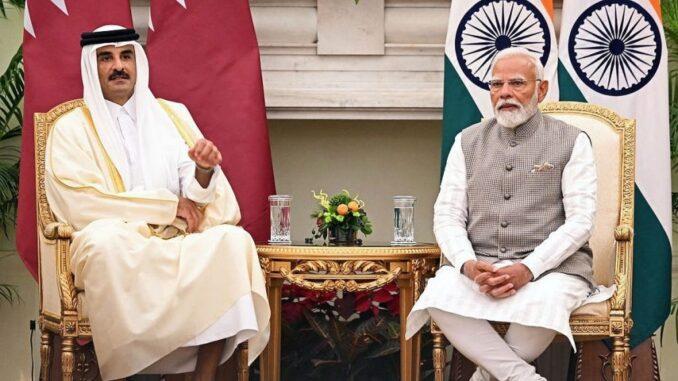
India and Qatar are locked in a compelling contest to host the 2036 Summer Olympics—a clash between ambition and experience as both nations pitch grand visions to the International Olympic Committee, which has already awarded 2028 to Los Angeles and 2032 to Brisbane. With 2036 still undecided, the race intensifies in both scope and symbolism.
Qatar officially declared its candidacy in July, unveiling a sleek campaign backed by royal figures Sheikh Joaan bin Hamad Al Thani and Sheikha Hind bint Hamad Al Thani. With 95 percent of venues reportedly complete and a resume stacked with international events—including the 2022 FIFA World Cup, the 2006 Asian Games, and the 2019 World Athletics Championships—Qatar emphasizes readiness, experience, and legacy. Their message is universal: sport as a unifying force across borders and beliefs. This narrative was reinforced during recent appearances at global sports summits, positioning Qatar as a diplomatic bridge and a logistical leader.
India, the world’s most populous country, has developed its bid more quietly over two years, anchored in the city of Ahmedabad, Gujarat. Its proposed Sardar Vallabhbhai Patel Olympic Enclave stands at the core of its vision. The country’s campaign speaks of peace, friendship, and shared progress, and is aligned with its national initiative, Viksit Bharat 2047, marking the centenary of independence. India’s bid has garnered public support from high-profile figures such as Sebastian Coe, president of World Athletics, who has familial ties to India and voiced enthusiasm for the proposal.
However, both bids face headwinds. India must address concerns raised by the IOC regarding governance within its Olympic Association, doping rates, and its limited medal record on the global stage. Persistent, albeit reduced, geopolitical tensions with Pakistan add another layer of complexity. A senior official quoted in The Indian Express acknowledged the candid nature of these discussions and recognized that while India remains in contention, reforms are necessary to move forward.
Qatar, despite its logistical superiority, must confront criticism over human rights. Amnesty International and other global watchdogs have flagged issues surrounding labor laws, migrant worker treatment—especially in the lead-up to the 2022 World Cup—and restrictive stances on LGBTQ+ rights and gender equality. The organizing committee has admitted there is “room for improvement,” while continuing to defend its broader vision for inclusive transformation through sport.
Beyond logistics and diplomacy, the historical context carries weight. Of the 33 Summer Olympics held through Paris 2024, only four have taken place in Asia—in Tokyo (1964, 2020), Seoul (1988), and Beijing (2008). For a region that houses over half the world’s population, the opportunity to host represents more than prestige—it’s about recognition, legacy, and reshaping global perceptions.
Qatar’s bid aligns with its National Vision 2030, a sweeping development agenda. India’s aligns with its centenary celebrations in 2047, aiming to showcase sporting passion, economic strength, and democratic vibrancy. Both nations present powerful stories: Qatar as a seasoned host ready to deliver impact beyond infrastructure; India as an emerging force seeking its rightful place among Olympic hosts through major trial events such as the Commonwealth Weightlifting and Asian Swimming Championships in 2023, with several more lined up including the 2027 Women’s Volleyball World Championship and the 2028 World Athletics U20 Championships.
Meanwhile, other contenders—Turkey, Indonesia, Hungary, Germany—seem to be stepping back. Germany’s Volker Bouffier has even cast doubt on Europe’s chances, potentially opening space for Asia to reclaim the spotlight.


Be the first to comment