
By Leonard Ratnayake
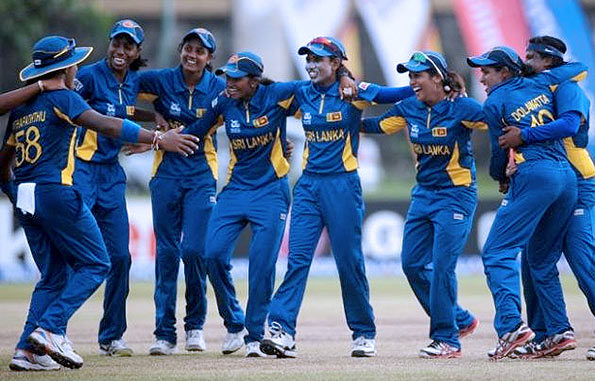
SOUTHAMPTON – Sri Lanka will head into Tuesday’s crucial ICC Women’s T20 World Cup clash against defending champions New Zealand at the Ageas Bowl determined to prove that their opening-day setback against England was merely a false start rather than a sign of deeper concerns.
The 87-run defeat to the hosts at Edgbaston exposed several shortcomings, most notably a bowling attack that struggled to contain England’s powerful batting line-up as Sri Lanka conceded a daunting 222 for 1, the highest total they have ever allowed in a Women’s T20 World Cup match.
The defeat inevitably sparked questions. Has the squad sacrificed too much experience in favour of youth? Did Sri Lanka select the right combination? And is a World Cup the ideal stage to blood so many newcomers?
These are valid discussions for a side that arrived in England carrying considerable momentum. Sri Lanka had enjoyed series victories over West Indies and Bangladesh before the tournament and further boosted confidence by completing successful run chases against Pakistan and the Netherlands in the warm-up matches.
Yet one disappointing afternoon against the tournament hosts has suddenly shifted the narrative. At the centre of those discussions is team manager cum selector on tour Vanessa Bowen de Silva, one of the pioneers of women’s cricket in Sri Lanka. Few individuals are better placed to understand the challenges facing the current side.
Vanessa Bowen captained Sri Lanka’s inaugural women’s national team and later became the first captain to lead the country at a Women’s World Cup when Sri Lanka made its debut appearance in India in 1997. Today, she serves as a professional match referee while also being a member of Sri Lanka Cricket’s newly appointed Cricket Transformation Committee.
Her cricketing pedigree, combined with the vast experience of captain Chamari Athapaththu, means decisions surrounding team selection and strategy have not been made lightly. Following training session in Southampton, Vanessa de Silva defended the squad’s composition and the balance chosen for the opening match.
“We had to focus on maintaining the right balance in the team,” she explained.
“Our strategy was to field six batters, one specialist spinner and two fast bowlers, with two all-rounders in Chamari and Kavisha providing additional options. In my view, going into English conditions with two spinners and only one fast bowler would have been a significant risk.”
The selection debate intensified after experienced campaigners Inoka Ranaweera, Rashmika Sewwandi and Dewmi Vihanga were left out of the World Cup squad. In their place, Sri Lanka opted to invest in youth, with Imesha Dulani, Hansima Karunaratne, Kaushini Nuthyangana, Sugandika Dasanayaka, Nimasha Madushani, Kawya Kavindi, Malki Madara and Mithali Ayodhya all experiencing their first Women’s World Cup.
Critics may argue that introducing so many newcomers at a global tournament represents a gamble. However, the management views it differently. The long-term development of women’s cricket requires opportunities for emerging talent, and Sri Lanka’s selectors clearly believe the future generation is ready to shoulder responsibility alongside established stars.
The challenge, however, is that World Cups rarely allow time for gradual adjustment. Young players are immediately exposed to the highest level of pressure and scrutiny. England’s experienced batting unit exploited that in the opening match, capitalising on inconsistent bowling, missed opportunities in the field and a visible inability to execute plans under pressure. Vaness de Silva acknowledged that reality.
“It was the opening match of the World Cup, and it came against the host nation, so there was naturally a great deal of excitement and pressure,” she said. “We also had a few newcomers in the side. I acknowledge that we were not at our best that day and failed to execute our plans effectively against the experienced England batters.”
While the bowling performance attracted criticism, the management remains convinced that batting remains Sri Lanka’s strongest weapon. Athapaththu’s early dismissal against England was a major setback, and the team never truly recovered despite encouraging contributions from Harshitha Samarawickrama and Nilakshika Silva.
According to the Manager cum selector on tour, Sri Lanka’s route back into contention lies with the top order. “Batting is the strength of this side, and it would not be wise to compromise our greatest asset,” she said. “We need a strong start from the top order, and one of Chamari Athapaththu, Vishmi Gunarathna or Imesha Dulani, who did not play the first match, will need to play a substantial innings.”
The questions raised after Edgbaston have not disappeared. Tuesday’s encounter may begin to provide some answers.
“We also have Chamari and Kavisha Dilhari as batting all-rounders, both of whom bring a wealth of experience to the team. Their presence strengthens our batting depth while offering valuable bowling options. Therefore, I believe three specialist bowlers are sufficient for this combination.”
Sri Lanka’s next opponents arrive in Southampton carrying their own wounds. Defending champions New Zealand suffered an early setback too when they were beaten by the West Indies, a result few would have predicted before the competition began. That upset serves as a reminder that reputations alone guarantee nothing at World Cups.
For Sri Lanka, the task now is not to dwell on Edgbaston but to respond positively. The opening defeat exposed weaknesses, but it also provided valuable lessons for a young squad still finding its feet on the global stage.
“The players have learned important lessons from that defeat,” de Silva said.
“We will put the disappointment behind us and focus on the positives as we prepare for the upcoming matches. The team is training hard and is determined to perform well in the games ahead. I am confident they will bounce back and play to their true potential.”
Whether that response comes against New Zealand remains to be seen. But one thing is certain: Sri Lanka’s World Cup campaign is far from defined by a single defeat.
The tournament is still at early stage, and Southampton offers an opportunity not only to earn two valuable points but also to demonstrate that the faith shown in a new generation of players is justified.
Be the first to comment