
By Hishan Welmilla
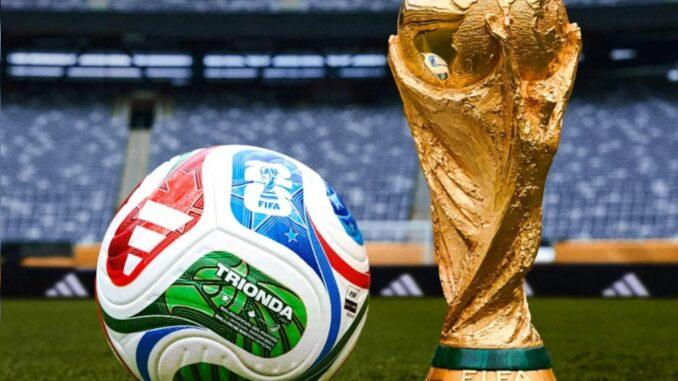
The FIFA World Cup 2026 finally arrives tonight, ushering in a new era for international football—one defined by scale, diversity, and unprecedented ambition. For the first time in history, the tournament will be jointly hosted by three nations—the United States, Canada, and Mexico—spanning an entire continent and setting the stage for what is already being described as the biggest World Cup ever.
The opening match takes place at the iconic Estadio Azteca in Mexico City, where hosts Mexico face South Africa in a symbolic curtain-raiser. This fixture not only marks the start of the tournament but also serves as a nostalgic nod to the 2010 World Cup opener, where the same two nations played out a memorable draw. Mexico enters as the favorite, buoyed by home support and a strong squad, while South Africa arrives eager to prove it belongs back on football’s biggest stage.
This edition of the World Cup is historic for more than just its hosts. It is the first to feature 48 teams, expanding from the traditional 32-team format and creating a massive 104-match schedule across 16 cities. The new structure divides teams into 12 groups of four, with the top two in each group advancing, along with the eight best third-placed teams. This ensures that 32 teams progress into a newly introduced Round of 32, adding extra knockout drama and increasing the chances of surprise runs from emerging nations.
The expanded format has reshaped the competitive landscape. With more teams from Asia, Africa, and North America qualifying than ever before, the tournament promises a broader global representation and a wider range of playing styles. For fans, this means more matches, more storylines, and more opportunities for underdogs to shine.
Logistically, the tournament is equally groundbreaking. Matches will be held across 16 host cities, stretching from Vancouver to Miami, and from Los Angeles to Toronto. The United States will host the majority of games, including the knockout rounds and the final, which is set for July 19 at MetLife Stadium in New Jersey. Mexico and Canada will each host key group-stage matches, ensuring that all three nations play a central role in the competition.
Beyond the football itself, the 2026 World Cup is being positioned as a cultural spectacle. Opening ceremonies across all three host countries will feature major international artists, blending music, entertainment, and sport in a way that reflects the global appeal of the tournament. This fusion of sport and entertainment underscores FIFA’s ambition to elevate the World Cup into an even more immersive global event.
On the pitch, several narratives will unfold from the very first whistle. Group A, which includes Mexico, South Africa, South Korea, and Czechia, is already shaping up to be one of the most intriguing groups. Mexico will look to assert dominance early, but disciplined sides like South Korea and resurgent teams like Czechia could complicate the picture. With three teams potentially advancing, every match carries significant weight.
The tournament also represents an opportunity for established powers to reassert themselves and for new contenders to emerge. Traditional giants such as Brazil, Germany, and France will aim to navigate the expanded format, while nations making rare or debut appearances will seek to seize the spotlight. The longer schedule and increased number of matches will test squad depth, tactical flexibility, and endurance like never before.
From a broader perspective, the 2026 World Cup symbolizes football’s continued globalization. By expanding participation and hosting across multiple countries, FIFA is pushing the tournament beyond its traditional boundaries, making it more inclusive and accessible to fans worldwide.
As the opening whistle approaches tonight in Mexico City, anticipation is at a fever pitch. The next 39 days promise drama, passion, and unforgettable moments as 48 nations chase a single dream. Whether it’s a powerhouse lifting the trophy or an underdog capturing hearts, the stage is set for a World Cup that could redefine the sport’s future.
The journey begins now.
Be the first to comment