
Sri Lanka Takes 156 Athletes to Nagoya in a Broad Asian Games Challenge
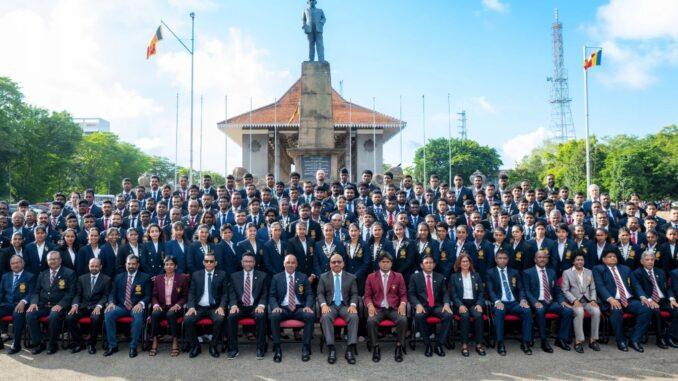
Sri Lanka will travel to Japan with a 156-member athlete contingent for the Asian Games in Aichi-Nagoya, comprising 100 male and 56 female athletes competing across 25 sports disciplines.
The breadth of the contingent is significant. Alongside established disciplines such as athletics, cricket, rugby and boxing, Sri Lanka will also compete in sports including modern pentathlon, 3×3 basketball, beach volleyball, surfing, artistic gymnastics and diving.
The Games therefore provide more than an opportunity to compete for medals. They offer a valuable assessment of the country’s sporting depth and the progress being made across a wide range of disciplines.
Rumesh Tharanga leads the athletics challenge
Among the athletes attracting the greatest international attention is javelin thrower Rumesh Tharanga, who has enjoyed a remarkable 2026 season.
Tharanga has established himself among the world’s leading javelin throwers, producing throws beyond 90 metres and competing successfully on the international circuit. His performances in Rome and Zurich, together with his Diamond League Final success, have raised expectations surrounding his Asian Games appearance.
His preparations, however, have been complicated by the reported damage to several of his competition javelins during air transportation. Despite that setback, his experience and recent performances make him one of the most prominent Sri Lankan athletes heading to Nagoya.
His presence also gives Sri Lankan athletics a strong focal point, although the country’s track and field representation extends well beyond the javelin.
Cricket remains a major attraction
Cricket will naturally command considerable attention. Sri Lanka has a long-established cricketing tradition and extensive experience in the T20 format.
The Asian Games provide an opportunity for both the men’s and women’s programmes to test their depth against leading Asian cricket nations. For younger players in particular, the tournament can provide valuable exposure to international competition outside the regular bilateral and ICC calendar.
Rugby and hockey bring team competition
Rugby Sevens is another discipline where Sri Lanka has considerable experience at Asian level. The demanding nature of the seven-a-side game places a premium on speed, fitness, discipline and tactical awareness.
Sri Lanka’s hockey team will face a similarly challenging environment, competing against countries where the sport has a deep-rooted structure and significant resources.
The team events will also test something different from individual disciplines — the ability to maintain consistency across several matches and perform collectively under pressure.
Combat sports offer opportunities
Sri Lanka’s representation in Judo, Wushu, Boxing, Karate, Taekwondo and Wrestling adds considerable variety to the contingent.
These disciplines can produce highly competitive contests, with athletes required to combine technical ability, physical preparation and tactical awareness. A strong performance in the early rounds can open the door to deeper progression in the tournament.
Weightlifting will provide another test of Sri Lankan strength and technical execution against some of Asia’s most established programmes.
Water sports provide another dimension
Sri Lanka’s geographical advantages are reflected in its representation in Swimming and Diving, Rowing, Sailing and Surfing.
Surfing is particularly interesting given Sri Lanka’s extensive coastline and growing interest in the sport. Competing at the Asian Games provides Sri Lankan surfers with an opportunity to gain experience against athletes from countries with increasingly sophisticated high-performance programmes.
Rowing and sailing also provide platforms for Sri Lankan athletes to compete in technically demanding events where preparation, equipment and consistency are crucial.
Racquet sports and precision events
Badminton, Table Tennis and Squash will expose Sri Lankan competitors to some of the strongest racquet-sport systems in Asia.
The presence of major sporting nations such as China, Japan, South Korea and India means the standard will be exceptionally high. For Sri Lanka’s players, however, competing against such opposition can provide valuable lessons and a benchmark for future development.
Archery and Artistic Gymnastics will demand a different combination of concentration, precision and technical execution, while Golf provides another opportunity for Sri Lankan competitors to measure themselves against the region’s leading players.
A changing sporting landscape
The inclusion of Basketball 3×3, Kabaddi, Beach Volleyball and Modern Pentathlon illustrates the increasingly diverse nature of Sri Lankan participation at major multi-sport events.
These sports may not have the same public profile as cricket or athletics, but international exposure is important for their development. Competing against established Asian programmes can help identify the areas where Sri Lanka has potential and where greater investment and preparation are required.
Ultimately, Nagoya will provide Sri Lanka with a broad sporting examination.
The 156 athletes will arrive with different levels of experience, different ambitions and different challenges. Some are established international competitors; others are using the Asian Games as an important step in their development.
For Tharanga, the spotlight will be particularly intense after a breakthrough international season. For the rest of the contingent, Nagoya represents a chance to demonstrate that Sri Lanka’s sporting ambitions extend well beyond its traditional strengths.
The real significance of the 25-sport representation may therefore lie not only in what happens on the podium, but in what Sri Lanka learns about the depth, direction and future potential of its sporting talent.
Be the first to comment