
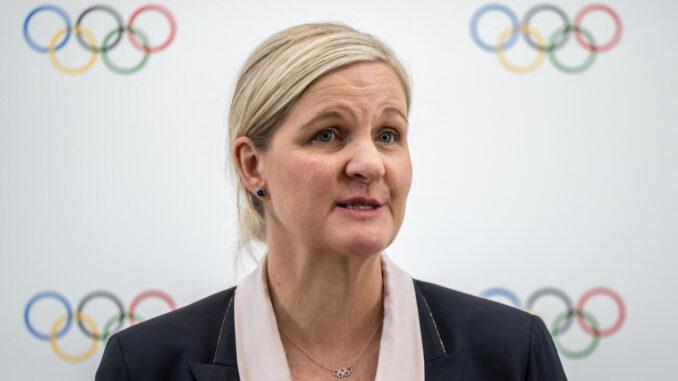
World sport is going through a moment of great confusion due to the geopolitical context we are living in. The invasions of Russia and Israel are affecting the international sporting landscape and, after years of armed conflict, we now see how, for example, some international federations allow Russian athletes to compete under a neutral flag, while others maintain an absolute veto. This disparity not only affects the athletes involved, but also the fans and the very credibility of the global sports system. The message it conveys is clear: there is no unity.
This week’s case of the International Ski Federation (FIS), which decided not to readmit Russian athletes even as neutrals, contrasts with the International Bobsleigh and Skeleton Federation (IBSF), which is considering reopening the door. Two opposing approaches that reveal a fracture within the Olympic Movement. And with the Milano-Cortina Olympic Games just around the corner… what will this distance within the Olympic Movement mean? Russia should be looked at with the same eyes by all of international Olympism, regardless of the sport or the leadership of one federation or another.
The IOC statement and an open dilemma
The situation coincided with a pronouncement by the International Olympic Committee (IOC), which at its most recent Executive Board meeting focused on a different but related issue: the importance of guaranteeing access for all athletes to countries hosting international competitions. The statement was clear: “These actions deprive athletes of their right to compete peacefully and prevent the Olympic Movement from showing the power of sport.”
The trigger was Indonesia’s cancellation of visas for Israeli athletes, which led the IOC to suspend any dialogue with its national Olympic committee regarding future candidacies. It also recommended that international federations not take events to that country until guarantees of access for all exist.

The risk of double standards
The principle championed by the IOC —free and non-discriminatory access for all athletes— clashes with the uneven practice we see today among the federations. How can it be explained that in some sports a Russian athlete could compete and in others cannot? What message does it send to society when the criteria are not uniform? Is Russia’s invasion different from Israel’s?
The problem goes beyond the specific case of Russia. If the IOC considers that nothing has changed in Ukraine over the past year, it must sustain that position clearly and maintain the restrictions. If, on the other hand, it believes that new conditions exist and that Russian and Belarusian athletes should return under neutral formulas, it must also say so unambiguously —just as it does with Israel— even though bodies such as the United Nations are still asking Benjamin Netanyahu for guarantees of peace and to allow basic actions such as humanitarian aid.
A responsibility of the Olympic Movement
Without Olympic unity and clarity, each federation will continue applying its own criteria, creating a kind of fragmented marketplace of decisions that reflects division, not unity. And if global sport needs something in times of political and social tension, it is coherence. Sport, at this moment, must be a social “glue” and an example, as it was little more than a year ago with the seamless coexistence in the Olympic Village.
In this line of openness and normalization was Astrit Hasani, president of the European Weightlifting Federation (EWF), who last week sent an open letter to IOC president Kirsty Coventry. In it, he called for an end to the ‘Individual Neutral Athlete’ (AIN) status, arguing that it contradicts the Olympic principles of equality and fairness.
The paradox is that the IOC itself warns of the importance of all athletes having access to compete, while at the same time maintaining silence on Russia, leaving space for opposing interpretations. How much longer can the Olympic Movement sustain this situation without putting the credibility of its principles at risk?
Be the first to comment