
By Hishan Welmilla MBA,
Sport has always been described as a great unifier. It brings together people across ethnic, religious, social and economic boundaries and gives communities a common identity. Yet, if Sri Lanka is serious about using sport as a force for social inclusion, it must ask a difficult question: Are we really making sport accessible to everyone, or are we simply celebrating inclusion when an athlete succeeds?
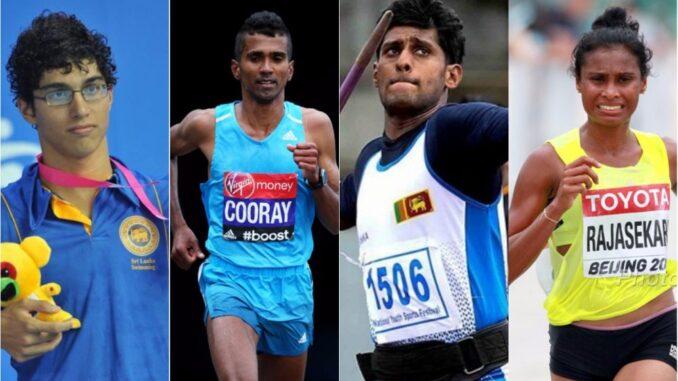
Sri Lanka has produced outstanding athletes with disabilities, women champions and talented sportspeople from disadvantaged communities. But inclusion cannot be measured only by medals. It must be measured by how many children get an opportunity to play, how many girls remain in sport, how accessible our stadiums are, and whether a child with a disability feels that the sporting field belongs to them too.
Sri Lanka’s National Sports Policy already recognises the importance of bringing persons with disabilities into sport and calls on sports bodies to establish mechanisms to integrate them into mainstream activities. The challenge is turning that policy intention into everyday reality.
Move Beyond Separate Competitions
Sri Lanka has made considerable progress in creating opportunities for athletes with disabilities, particularly through Paralympic sport. However, true inclusion should begin long before an athlete reaches the national or international level.
The problem is that many children with disabilities encounter exclusion at the very first stage of participation. School sports programmes are often designed around conventional physical abilities, leaving children with disabilities watching from the sidelines. This creates the perception that sport is something they can only participate in through a separate system.
That mindset needs to change.
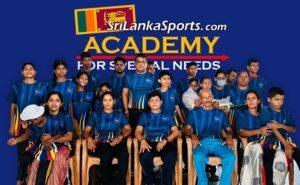
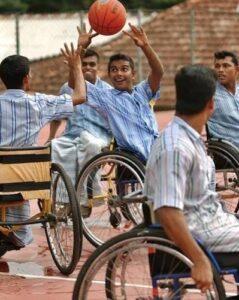
Schools should introduce inclusive sporting activities in which children of different abilities participate together wherever possible. Athletics, swimming, table tennis, badminton, wheelchair racing, sitting volleyball and adapted versions of traditional games can provide opportunities for everyone.
The objective is not necessarily to make every event identical. Inclusion means creating an equal opportunity to participate, even when the method of participation is different.
Sri Lanka could introduce an annual National Inclusive School Sports Festival, with every province conducting preliminary competitions. Such a programme would allow children with disabilities to compete, meet other children and, importantly, be recognised as athletes rather than simply as children requiring assistance.
Make Schools the Starting Point
If Sri Lanka wants a long-term change in sporting culture, schools are the most important starting point.
Schools are where children first develop their attitudes towards competition, teamwork, winning and losing. They are also where children learn whether differences should be respected or treated as barriers.
Unfortunately, many schools still lack trained physical education teachers, adapted equipment and accessible facilities. A child who uses a wheelchair, for example, may technically be allowed to participate but still be unable to reach the playing area.
The Education Ministry, Ministry of Sports, provincial authorities and national federations should therefore develop an Inclusive Physical Education Programme.
Physical education teachers should receive basic training in adapting sports for children with different abilities. Schools should also receive simple equipment packages rather than expensive specialised infrastructure in the first stage.
More importantly, inclusion should become part of the school sports culture.
A school sports meet should not merely celebrate the fastest runner or highest jumper. It should celebrate participation, teamwork, perseverance and achievement across different abilities.
Inclusion Must Also Mean Gender Equality
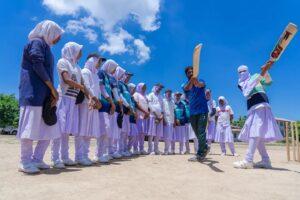
Sri Lanka has produced outstanding women athletes, yet women’s participation in sport continues to face cultural, financial and institutional barriers.
Girls in some communities are still discouraged from participating in sport because of traditional attitudes, concerns about safety, lack of facilities or the belief that sporting careers are unsuitable for women.
This is where schools and communities can make a major difference.
Girls should have access to the same coaching, playing facilities and competitions available to boys. Women’s teams should receive proper development programmes rather than being formed only when an international tournament approaches.
The problem also extends to leadership.
Sri Lanka needs more women coaches, referees, administrators, technical officials and decision-makers. If young girls never see women sitting on sports boards, coaching national teams or managing major sporting organisations, they may believe that leadership in sport is reserved for men.
Corporate sponsorship can play an important role. Companies could establish long-term programmes specifically supporting girls’ sport, women’s leagues and female coaches.
The objective should be to create a sporting pathway that begins with a girl kicking a ball or picking up a netball and can ultimately take her to the national team, coaching bench or sports administration.
Take Sport Beyond Colombo
One of Sri Lanka’s biggest sporting problems is the concentration of opportunities in Colombo and a few major cities.
Talent exists throughout the country, but opportunity does not.
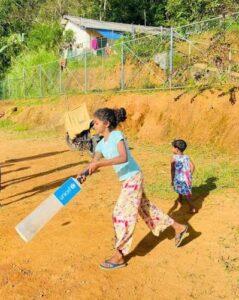
A child in Jaffna, Batticaloa, Anuradhapura, Badulla, Monaragala or Hambantota should have access to quality coaching and competition without having to move to Colombo.
Sri Lanka could establish District Inclusive Sports Centres by using existing government schools, provincial sports complexes and public playgrounds. These need not be expensive high-tech facilities. What is required is proper coordination.
Each district could identify coaches, physical education teachers and volunteers who can conduct regular programmes for children with disabilities, girls and children from disadvantaged communities.
This would also create a better talent-identification system.
At present, Sri Lanka may be losing talented athletes simply because nobody discovers them. A national inclusive sports network could create a pathway from village → school → district → province → national level.
Stadiums Must Belong to Everyone
Physical accessibility is one of the most overlooked areas of Sri Lankan sport.
A modern stadium may have excellent floodlights, seating and playing surfaces, but if a wheelchair user cannot enter the venue independently, the facility cannot genuinely be described as inclusive.
Accessibility should become a mandatory requirement for all new sports infrastructure.
Existing stadiums should undergo accessibility audits covering ramps, elevators, toilets, parking, seating, changing rooms and spectator movement.
But accessibility should not be limited to athletes.
A parent with a disability should be able to watch their child compete. An elderly spectator should be able to reach their seat safely. A visually impaired supporter should be able to receive assistance and information.
Sport is not only about the person on the field. It is also about creating an environment in which everyone can participate as a spectator, volunteer, official, coach or supporter.
The Media Can Change the Narrative
The media has perhaps the greatest power to change public attitudes towards inclusion.
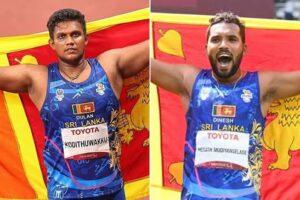
Too often, para-athletes are covered only when they win medals. Even then, stories sometimes focus more on their disability and personal hardship than on their sporting performance.
That approach should change.
A para-athlete who breaks a national record should receive the same serious sporting analysis as any other athlete. Journalists should discuss technique, preparation, competition, rankings and performance.
The same applies to women’s sport.
If newspapers, television channels and digital platforms provide consistent coverage of women’s competitions, public interest will grow. Increased public interest will attract sponsors, which will provide better financial resources, which will improve the quality of competition.
It becomes a cycle.
Sri Lankan sports media can therefore become an important partner in building an inclusive sporting culture rather than simply reporting results.
Business Has a Role Too
The private sector should not view inclusion as merely a corporate social responsibility exercise.
It can become a long-term investment in Sri Lankan sport.
Instead of sponsoring only high-profile national teams, companies could adopt schools, districts, women’s teams or para-athletes.
For example, a corporate sponsor could fund an inclusive sports programme in one district for three years. The programme could provide equipment, coaching, transportation and competitions.
Another company would sponsor a group of promising para-athletes, covering training, travel and equipment.
Such programmes would give companies measurable social impact while creating stronger relationships with communities.
Sri Lankan businesses already spend considerable amounts on advertising through sport. A portion of that investment could be redirected towards building the next generation of athletes.
Inclusion Must Become a National Sporting Culture
Ultimately, inclusion cannot be achieved through one government programme, one sports federation or one annual event.
It requires a change in culture.
The question should no longer be, “Can this person participate in sport?”
The question should be, “What can we change so that this person can participate?”
That difference in thinking is fundamental.
Sri Lanka has repeatedly demonstrated that when an athlete receives the right opportunity, extraordinary things can happen. The country has produced champions from rural villages, women who have competed against the world’s best and para-athletes who have carried the national flag with distinction.
The next challenge is to ensure that these success stories are not exceptions.
Inclusive sport should not be a charity. It should be a right, an investment and a national priority.
If Sri Lanka can create a sporting system where a child with a disability, a girl from a rural school, a child from a low-income family or a young person from any community can see a genuine pathway to participation and excellence, then sport will have achieved something far greater than winning medals.
It will have helped build a more equal Sri Lanka.
Be the first to comment