
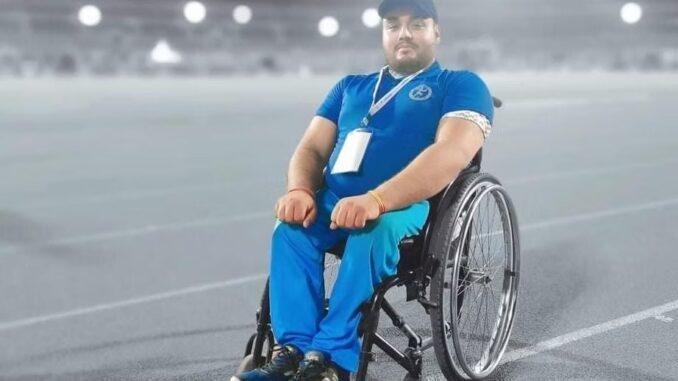
Para athletics athlete returned adverse analytical findings for a Prohibited Substance at the New Delhi 2026 World Para Athletics Grand Prix.
The International Paralympic Committee (IPC) has banned Para athletics athlete Anmol Vasistha for a period of three (3) years for committing an anti-doping rule violation (ADRV), in breach of the IPC Anti-Doping Code.
The Indian athlete returned adverse analytical findings (AAFs) for a Prohibited Substance in urine samples provided in-competition on 11 March 2026 during the Men’s Javelin Throw F55 competition at the New Delhi 2026 World Para Athletics Grand Prix.
The substance was a metabolite of dehydrochloromethyl-testosterone (DHCMT). DHCMT is included on the World Anti-Doping Agency (WADA) 2026 Prohibited List under the class S1.1 Anabolic Androgenic Steroids (AAS).

The athlete was provisionally suspended by the IPC on 24 April 2026 pending a resolution of his case. The athlete subsequently accepted his commission of the ADRV, and the consequences proposed by the IPC. As a result of his violation, the athlete will be ineligible for all competition and other sporting activities (other than authorised anti-doping education or rehabilitation programs) for three (3) years from 24 April 2026 until 23 April 2029.
The results obtained by the athlete in the Men’s Javelin Throw F55 competition at the New Delhi 2026 World Para Athletics Grand Prix are automatically disqualified, with all resulting Consequences, including forfeiture of any medals, points and prizes. All other results obtained by the Athlete in the New Delhi 2026 World Para Athletics Grand Prix are also disqualified, with all of the resulting Consequences, including forfeiture of any medals, points and prizes.
In addition, all other results obtained by the athlete from the date the samples were collected until the commencement of the Provisional Suspension are also disqualified, with all resulting Consequences, including forfeiture of any medals, points and prizes.
Each athlete is strictly liable for the substances found in their sample. An ADRV occurs whenever a prohibited substance (or its metabolites or markers) is found in their bodily sample, whether or not the athlete intentionally or unintentionally used a prohibited substance or was negligent or otherwise at fault.
As a signatory of the World Anti-Doping Code (the WADC), the IPC remains committed to a doping-free sporting environment at all levels. The IPC has established the IPC Anti-Doping Code in compliance with the general principles of the WADC, including the WADC International Standards, expecting that, in the spirit of sport, it will lead the fight against doping in sport for athletes with an impairment
Be the first to comment