
The Development of Women’s Cricket in Sri Lanka
From Pioneering Beginnings to a New Era of Professionalism and Global Ambition
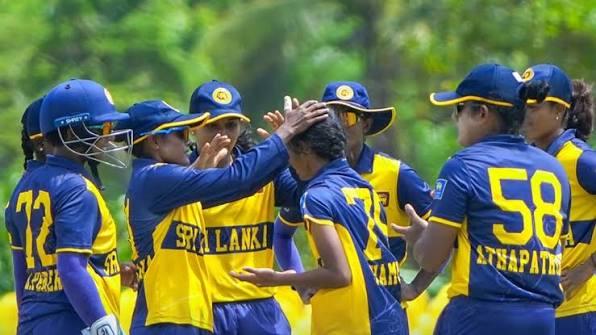
Women’s cricket in Sri Lanka has travelled a remarkable distance from its modest beginnings in the 1990s to becoming one of the country’s most visible and competitive women’s sports. The journey has been characterised by pioneering administrators, players who challenged social and sporting barriers, periods of remarkable international success, frustrating inconsistencies, and, more recently, a stronger commitment to domestic structures and the development of the next generation.
Today, Sri Lanka possesses a women’s team capable of competing with the leading nations, a growing domestic pathway, an established international programme and a generation of players who increasingly see cricket as a professional career rather than simply a representative sport. The challenge now is to turn that progress into sustained success.
1. The foundations of women’s cricket
The organised development of women’s cricket in Sri Lanka is relatively recent when compared with the country’s long men’s cricket tradition.
A decisive milestone came in 1997, when the Sri Lanka Women’s Cricket Association was established under the leadership of Gwen Herat, its founding president. Sri Lanka Cricket has recognised Herat as one of the pioneering figures responsible for laying the foundations of women’s cricket in the country. In 2026, SLC announced that its Major Club Women’s 50-Over Tournament would be renamed the Gwen Herat Memorial Trophy in her honour.
That same year was historic on the field. Sri Lanka played its first Women’s ODI against the Netherlands in November 1997 and subsequently appeared at the 1997 Women’s Cricket World Cup in India.
The significance of this period cannot be overstated. Women’s cricket was still struggling for recognition in many countries, and Sri Lanka’s decision to establish a formal women’s cricket structure and enter international competition provided a pathway for girls to represent the country.
The early pioneers, including players such as Vanessa de Silva, Rasanjali Silva, Suthershini Sivanantham, Vasanthi Ratnayake and Chamani Seneviratna, created the platform on which subsequent generations would build.
2. The first generation and the struggle for recognition
The early years were difficult.
Unlike men’s cricket, women’s cricket did not initially possess a deep club structure, extensive media coverage, large crowds or substantial commercial backing. Players often had to balance cricket with education, employment and family responsibilities.
Nevertheless, Sri Lanka gradually established itself as a regular international participant.
The country’s first Test match came in 1998 against Pakistan, and it remains Sri Lanka Women’s only Test to date. The team also established itself as a regular World Cup participant.
The importance of those early international appearances went beyond results. Every tour created experience; every international match provided exposure; and every player who returned home became a potential role model for another young girl.
This was the beginning of the transition from women’s cricket being viewed as an occasional sporting activity to being recognised as an organised national sport.
3. The Shashikala Siriwardene generation
The 2000s produced the first major generation of Sri Lankan women’s cricketers.
Among the most influential was Shashikala Siriwardene, who became one of the defining figures of Sri Lankan women’s cricket. Her leadership, all-round ability and longevity helped provide continuity during a period when the national team was still developing.
Siriwardene was particularly important because she represented a bridge between the pioneering generation and the modern professional era.
Her career also demonstrated one of the fundamental realities of Sri Lankan women’s cricket: talented players could reach the international level, but the supporting structures around them were often not yet strong enough to sustain consistent success.
4. The breakthrough of 2013
The most important early breakthrough came at the 2013 Women’s Cricket World Cup in India.
Sri Lanka entered the tournament without being regarded as one of the major contenders. Yet the team produced one of the greatest campaigns in its history.
Sri Lanka defeated defending champions England and then stunned hosts India by 138 runs, advancing to the Super Six stage for the first time. The team eventually finished fifth, which remains its best Women’s World Cup finish.
That tournament changed perceptions.
Sri Lanka had shown that its women’s team could defeat established cricketing nations rather than merely compete against them.
It also demonstrated the importance of experienced leadership. Siriwardene was central to that team, while players such as Chamari Athapaththu began to emerge as future stars.
However, the success was not immediately converted into sustained progress. Following the 2013 World Cup, several experienced players retired or stepped away from the game, creating a generational gap. Siriwardene herself later acknowledged that the loss of experienced players significantly affected the team.
This became one of the recurring themes in Sri Lankan women’s cricket: periods of brilliance followed by rebuilding.
5. The Chamari Athapaththu revolution
If Gwen Herat provided the administrative foundation and Shashikala Siriwardene provided the leadership bridge, Chamari Athapaththu became the transformational figure on the field.
Athapaththu emerged as an explosive left-handed batter capable of changing matches almost single-handedly. More importantly, she became the face of Sri Lankan women’s cricket internationally.
The ICC identifies her as the first Sri Lankan woman to play franchise cricket, while her performances have established her as one of the most recognisable players in the women’s game.
Her landmark performances have repeatedly raised Sri Lanka’s profile.
At the 2017 World Cup, Athapaththu produced an extraordinary unbeaten 178 against Australia, at the time one of the most remarkable individual innings in Women’s World Cup history. Australia ultimately chased down Sri Lanka’s total, but the performance demonstrated that Sri Lanka possessed a batter capable of matching the world’s best.
Her career reached another landmark in 2024 when she became the No. 1-ranked ODI batter in the world after scoring an unbeaten 195 against South Africa.
Athapaththu’s significance extends beyond statistics.
She demonstrated to young Sri Lankan girls that a woman from Sri Lanka could become an international cricket star, play franchise cricket and compete against the world’s best.
In that sense, her impact has been both sporting and social.
6. The growth of T20 cricket
The introduction and expansion of Women’s T20I cricket created another important opportunity.
Sri Lanka played its first Women’s T20I in 2009, but the format became increasingly important during the 2010s and 2020s.
T20 cricket has particularly benefited Sri Lanka because it provides:
greater international exposure;
opportunities for younger players;
increased television and digital visibility;
greater commercial potential;
access to franchise cricket;
opportunities for players to develop specialised skills.
The rise of franchise cricket has also changed the aspirations of Sri Lankan players.
Athapaththu became the pioneer, but subsequent players have increasingly sought opportunities outside Sri Lanka. This creates both an opportunity and a challenge: international franchise experience can accelerate player development, but domestic cricket must be strong enough to continue producing replacements.
7. The 2022–2024 structural turning point
One of the most significant changes in recent years has been the move towards a more structured domestic development system.
Sri Lanka Cricket established a High Performance Centre for Women’s Cricket, designed to provide national, emerging and ‘A’ team players with specialised coaching, training and sports-science support. The programme was intended to create a stronger pathway into the national side.
This was important because Sri Lanka’s historic problem was not necessarily the absence of talented players. The greater problem was the lack of a sufficiently deep and continuous pathway from school and club cricket to international cricket.
The development model began to change.
8. The Women’s National Super League
A major milestone came in 2024, when Sri Lanka Cricket launched the Women’s National Super League (WNSL).
The inaugural competition included four teams — Colombo, Kandy, Dambulla and Galle — with both 50-over and T20 tournaments. SLC described it as an elevation of women’s cricket because players were competing in an elite domestic competition designed to provide a pathway to national selection.
The significance of the WNSL goes beyond simply adding another tournament to the calendar.
A strong domestic competition can provide:
Regular competitive cricket → performance data → national selection → high-performance training → international cricket.
That is the pathway Sri Lanka needs if it is to move from depending on a handful of exceptional players to producing a deep pool of international-quality cricketers.
9. Development of the U23 and U19 pathway
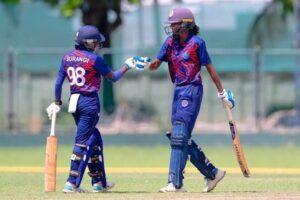
Another important development has been the expansion of age-group cricket.
The inaugural Women’s National Super League U23 tournament was played in 2024, with five teams participating. Dambulla won the competition after defeating Colombo in the final. SLC also conducted the Sri Lanka Youth League Girls U19 competition, won by Galle.
This is arguably one of the most important developments in the entire women’s cricket structure.
The future of Sri Lanka’s national team cannot depend indefinitely on a single generation.
A successful women’s cricket system must constantly replace senior players with younger cricketers who have already experienced high-level competition.
The U19 and U23 structures therefore represent an investment not merely in today’s team but in the national team of the 2030s.
10. Expansion of women’s club cricket
Club cricket is another area in which progress has become visible.
SLC’s 2024 annual report recorded a women’s limited-overs tournament involving 15 clubs, reflecting increased interest among Premier Clubs in establishing women’s teams. Chilaw Marians emerged champions, with Army Sports Club finishing runners-up.
This is important because national development cannot be built exclusively around centralised programmes.
The wider the club network, the greater the chance of identifying talent outside traditional cricketing centres.
It also gives players regular competitive opportunities rather than limiting their cricket to occasional national camps.
11. The historic 2024 Asia Cup triumph
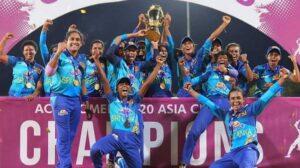
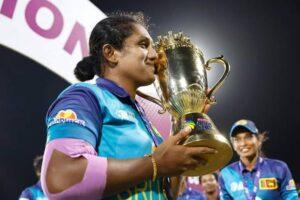
The greatest team achievement of the modern era came in 2024, when Sri Lanka won the Women’s Asia Cup.
The triumph was particularly significant because Sri Lanka defeated established Asian powers and did so under the leadership of Athapaththu.
It represented the culmination of years of gradual development.
The victory demonstrated that Sri Lanka could move beyond being a dangerous underdog and become a genuine tournament contender. SLC itself described the Asia Cup victory as a landmark moment and linked it to years of investment in women’s cricket and player development.
The Asia Cup triumph also had commercial and social significance.
A major international trophy provides:
increased media attention;
stronger sponsorship potential;
greater public recognition;
increased participation among girls;
greater bargaining power for players;
stronger justification for investment in women’s cricket.
12. The rise of the second generation
One of the encouraging aspects of recent Sri Lankan cricket has been the emergence of players capable of supporting Athapaththu.
Players such as Harshitha Samarawickrama, Kavisha Dilhari, Nilakshika Silva, Vishmi Gunarathne, Hasini Perera and Sugandika Kumari have helped broaden the team’s resources.
The current ICC squad illustrates the changing nature of Sri Lankan women’s cricket, combining experienced players such as Athapaththu with younger cricketers. Sri Lanka entered the 2026 international season ranked sixth in Women’s ODIs and seventh in Women’s T20Is, demonstrating that it has moved well beyond the margins of international women’s cricket.
This ranking position should be viewed as progress, but not as the final destination.
Sri Lanka’s challenge is to remain consistently competitive against Australia, England, India, New Zealand and South Africa rather than producing occasional victories against them.
13. The importance of professionalisation
The next phase of development must be about professionalisation.
Women’s cricket globally has changed dramatically. Players now have access to central contracts, franchise leagues, sports science, specialised coaches, nutritionists, analysts and professional training environments.
Sri Lanka cannot expect its women to compete consistently with the world’s best if the domestic environment remains semi-professional.
Important areas include:
Central contracts
Players need financial security so that international cricket can become a genuine career.
Sports science
Strength and conditioning, injury prevention, recovery and nutrition must become standard components of women’s cricket.
Specialist coaching
Batting, fast bowling, spin, wicketkeeping, fielding and tactical coaching need to be developed systematically.
Data analytics
Modern cricket increasingly depends on data. Sri Lankan women need access to analysts capable of identifying opposition patterns and improving individual performance.
Franchise cricket
Players should be encouraged and supported to participate in overseas leagues where appropriate, because franchise cricket provides exposure to different conditions, coaching systems and high-level opponents.
14. The school cricket challenge
Perhaps the most important long-term issue is school cricket.
Sri Lanka has one of the world’s strongest school cricket cultures on the men’s side. The women’s game does not yet have an equivalent nationwide structure.
This represents both a weakness and an opportunity.
A comprehensive schoolgirls’ cricket programme should include:
Under-13 competitions;
Under-15 competitions;
Under-17 competitions;
Under-19 competitions;
district-level talent identification;
school coaching programmes;
girls’ cricket festivals;
scholarships for talented players;
specialist coaching camps.
The objective should be to make cricket accessible to girls outside Colombo and the traditional cricketing centres.
15. Provincial and rural development
Sri Lanka cannot build a world-class women’s team if the talent pool remains concentrated in a limited number of schools and clubs.
The country needs a national women’s cricket development map.
District associations should be required to identify girls with potential and provide them with regular coaching and competition.
Talent from areas such as the North, East, Uva, North Central, Southern and Central Provinces should receive the same opportunities available in Colombo.
This would make women’s cricket more representative of the country and dramatically expand the talent pool.
16. The commercial opportunity
Women’s cricket is no longer simply a development project. It is a commercial opportunity.
The Asia Cup victory demonstrated the potential audience for Sri Lankan women’s cricket.
Sponsors can associate themselves with:
women’s empowerment;
youth development;
education;
health and fitness;
national pride;
leadership;
equal opportunity.
The national women’s team also provides brands with a powerful storytelling platform because many players have overcome significant barriers to reach the international level.
SLC and commercial partners should therefore develop dedicated women’s cricket sponsorship packages rather than treating the women’s game as an extension of men’s cricket.
17. Media coverage and visibility
Media coverage has played an important role in the growth of women’s cricket, but it remains an area requiring significant improvement.
Women’s matches should receive:
comprehensive television coverage;
live streaming;
statistical coverage;
newspaper and digital reporting;
player profiles;
documentaries;
social media campaigns;
school and grassroots storytelling.
The more frequently young girls see Sri Lankan women playing cricket, the more normal the sport becomes.
Visibility creates participation.
Participation creates talent.
Talent creates competition.
Competition creates international success.

18. Governance and the current challenge
The development of women’s cricket cannot be separated from the wider governance environment surrounding Sri Lankan cricket.
The ICC’s recent decision to remove Sri Lanka as host of the inaugural 2027 Women’s Champions Trophy because of concerns over government involvement in Sri Lanka Cricket is a significant setback. The decision highlights the importance of cricket administration being independent, stable and compliant with international governance principles.
This matters specifically to women’s cricket because major international events can accelerate development.
Hosting a global women’s tournament could have generated:
international exposure;
infrastructure investment;
tourism;
sponsorship;
media attention;
opportunities for local officials and volunteers;
greater visibility for women’s cricket.
Sri Lanka therefore needs governance stability if it is to maximise the next phase of women’s cricket development.
19. The player voice
Professionalisation also requires stronger player representation.
The formation of the Sri Lankan Professional Cricketers’ Association in 2026, backed by the World Cricketers’ Association, is potentially significant. Women’s captain Chamari Athapaththu has supported the initiative, particularly because player representation can strengthen negotiations around matters such as participation in franchise cricket.
A modern women’s cricket system should give players a meaningful voice in:
contracts;
workload management;
international scheduling;
franchise participation;
welfare;
retirement planning;
maternity policies;
injury protection.
Player welfare must become an integral part of cricket administration.
20. The major challenges ahead
Despite the progress, several challenges remain.
1. Overdependence on a few senior players
Sri Lanka has benefited enormously from Athapaththu, but no international team can rely indefinitely on one superstar.
2. Lack of depth
The gap between the national team and the next group of players must continue to shrink.
3. Domestic consistency
Domestic competitions need regular calendars, strong teams and meaningful competitive intensity.

4. Financial sustainability
Women’s cricket requires long-term investment rather than short-term programmes linked to major tournaments.
5. Infrastructure
More grounds, indoor facilities, fitness centres and quality coaching facilities are required.
6. Governance
Administrative instability can directly undermine long-term development.
7. Women’s participation
The sport must reach girls across the country, not simply those attending established cricket schools.
21. What Sri Lanka should do next
A 10-year Women’s Cricket Development Strategy from 2027–2037 would provide the ideal framework.
It should establish measurable targets in five areas:
Grassroots
Create women’s cricket programmes in every district and establish structured school competitions.
Domestic
Expand the National Super League and Major Club competitions and introduce stronger promotion/relegation structures.
High performance
Create specialised national squads for senior, ‘A’, U23 and U19 levels.
Professional
Expand central contracts, improve player welfare and establish comprehensive sports-science support.
International
Target consistent top-four finishes in Asia and qualification for World Cup semi-finals and finals.
Sri Lanka should also establish a dedicated Women’s Cricket Development Fund, supported jointly by SLC, government, sponsors and international cricket organisations.
22. The road ahead
The story of Sri Lankan women’s cricket is ultimately a story of transformation.
It began with pioneers who had to convince people that women could play representative cricket. It progressed through generations led by players such as Shashikala Siriwardene. It was transformed by the extraordinary career of Chamari Athapaththu. And today it is entering a phase in which the development of domestic structures, age-group cricket and high-performance programmes could determine whether Sri Lanka becomes a permanent member of the world’s elite.
The statistics demonstrate the progress. Sri Lanka has moved from its first ODI in 1997 to regular World Cup participation, from a fifth-place World Cup finish in 2013 to winning the Women’s Asia Cup in 2024, and from dependence on a handful of senior players towards a more structured development pathway.
The foundations are now considerably stronger.
But the next challenge is harder.
Sri Lanka must turn potential into consistency.
The objective should no longer be merely to produce one Chamari Athapaththu. It should be to create a system capable of producing a Chamari Athapaththu every generation.
If Sri Lanka can successfully connect school cricket, clubs, provincial programmes, U19 and U23 cricket, the National Super League, high-performance programmes and international cricket, women’s cricket can become one of the country’s strongest sporting success stories.
The journey that began with pioneers such as Gwen Herat nearly three decades ago has already changed the sporting landscape for Sri Lankan women. The responsibility of the present generation is to ensure that the next generation inherits not merely a successful national team, but a sustainable professional women’s cricket system.
Conclusion
Women’s cricket in Sri Lanka has progressed from an emerging sport seeking recognition into an increasingly competitive international programme. Its development has been driven by pioneering administrators, courageous players, stronger domestic competitions, high-performance structures and landmark international achievements.
The 2024 Asia Cup victory was not the end of the journey — it was the evidence that the journey is working.
The next decade should be about building depth, professionalism and sustainability. If those three elements are achieved, Sri Lanka can realistically aspire to become not merely a respected Asian women’s cricket nation, but a consistent global contender.
And that would be the true measure of the development of women’s cricket in Sri Lanka.
Be the first to comment