
By Leonard Ratnayake
Middle-order fragility and unreliable death bowling leave both sides searching for answers for the remainder of the series
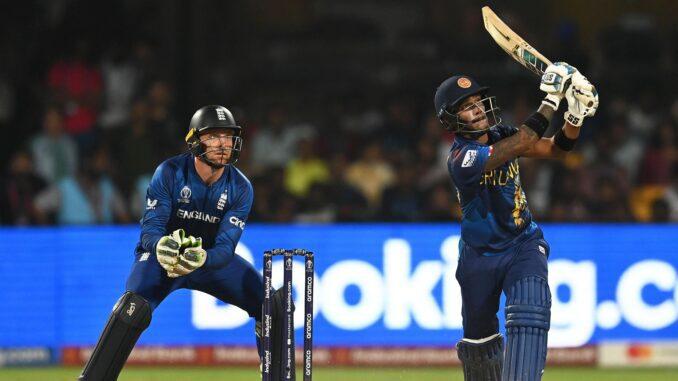
Both England and Sri Lanka were left confronting familiar shortcomings after the latest ODI, with neither side able to fully paper over cracks in their middle-order batting or death-over bowling. England paid the ultimate price at the finish, while Sri Lanka escaped more by fortune than authority.
One clear contrast between the two sides lies in batting depth. England boast a long tail, with all eleven players capable of contributing runs, notably, two of their lower-order batters even have first-class centuries to their names. Sri Lanka, by comparison, lack meaningful resistance from positions eight to ten, placing added pressure on their top and middle order.
Sri Lanka opted to rest Wanindu Hasaranga and Mahesh Theekshana, bringing in Jeffrey Vandersay and Dhananjaya de Silva, with the latter deployed as an all-rounder. That decision has reignited debate around Sri Lanka’s white-ball spin balance. Many observers believe Vandersay merits a regular place in limited-overs cricket, arguing that Theekshana has lost much of his early effectiveness. Although Hasaranga and Vandersay are both leg-spinners, Vandersay offers a different trajectory and rhythm that could add variety to Sri Lanka’s attack.
In the batting department, questions persist. Dhananjaya de Silva remains a high-class red-ball all-rounder, but in white-ball cricket he has yet to consistently provide the power-hitting Sri Lanka need in the middle overs. While Pavan Ratnayake continues to be backed, Kamindu Mendis appears a stronger option in a middle order that has repeatedly struggled against both wrist and finger spin.
There is optimism around Dunith Wellalage, who remains a long-term prospect worth investing in. However, senior batters Pathum Nissanka and Kamil Mishra must spend more time at the crease. In particular, technical flaws are beginning to surface in Nissanka’s game, issues that demand urgent attention with the World Cup approaching.
England, meanwhile, continue to pair explosive strike rates with frustrating inconsistency. This tournament represents an ideal opportunity to refine their often-haphazard batting approach. One tactical question stands out: Jos Buttler’s position in the order. Had England’s captain batted higher in the previous match, the outcome may well have been different.
The middle order trio of Harry Brook, Jacob Bethell and Sam Curran must show greater discipline. There was encouragement in Ben Duckett’s return to form, while Joe Root, ever dependable, needs to anchor innings deeper into the 50 overs to provide stability. At present, England’s middle order flickers rather than burns steadily.
England’s bowling also raises concerns. Adil Rashid continues to shoulder a heavy burden without sufficient support. Rehan Ahmed shows promise as an all-rounder but lacks the variation required at this level. Sam Curran’s slower ball remains a potent weapon, yet he tends to rely on it too frequently, diminishing its effectiveness.
Sri Lanka face similar challenges at the death. Asitha Fernando and Pramod Madushan have struggled for control and clarity under pressure, a problem mirrored by England’s Sam Curran and Jamie Overton.
With two matches remaining in the three-game ODI series, predicting the final outcome remains risky. Both teams appear evenly matched, not just in ability, but in shared vulnerabilities, setting the stage for an unpredictable finish.
Be the first to comment