
From a Sri Lankan perspective, cricket had been in slumber since Bangladesh completed their full-fledged red and white-ball tour by the end of June.
The pendulum swung back and forth during the opening encounter, and credit must go to Zimbabwe for coming agonisingly close to chasing a challenging target of 299 runs falling short by just seven.
Sri Lanka were put into bat first, but opener Nishan Madushka looked out of place, with his footwork appearing alarmingly poor. Is he a strokeless wonder? One wonders what the coach, captain, and selectors make of his form and technique.
Captain Charith Asalanka stated he had no choice but to go with seven batters and four bowlers. However, the absence of a fifth specialist bowler proved costly, conceding 80 runs as the responsibility was shared between Asalanka himself, Kamindu Mendis, and Janith Liyanage.
Asalanka also claimed that bringing in an all-rounder might have made things worse. However, a school of thought suggests that including one and opening with Pathum Nissanka and Kusal Mendis — may offer a more stable top order. At present, Madushka’s technical flaws make him look out of place at this level.
A well-compiled 100-run partnership for the second wicket between Pathum Nissanka and Kusal Mendis kept Sri Lanka in the game early. Nissanka scored a fluent 76 off 87 balls, including 12 boundaries, while Mendis’s contribution of 38 proved valuable.
Sri Lanka found themselves in trouble after Sadeera Samarawickrama fell for 35, followed by back-to-back dismissals of Asalanka (6) in the 37th over, reducing the visitors to 161 for 5. This brought two relatively new batters Janith Liyanage and Kamindu Mendis to the crease.
Had Sri Lanka lost one of these last recognised batters, the tail would have been exposed, giving Zimbabwe a prime opportunity to restrict them to under 250.
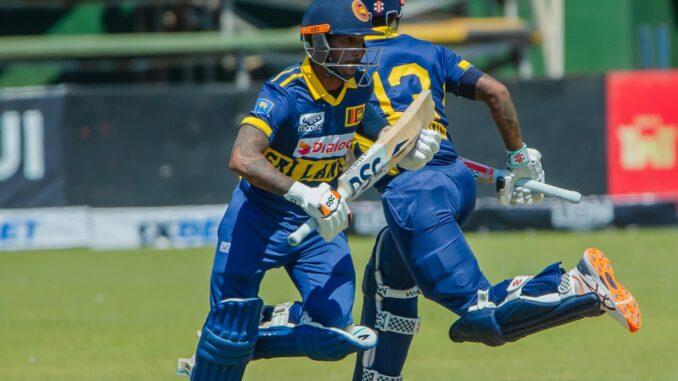
However, a sensational 137-run partnership off just 87 balls between Janith and Kamindu propelled Sri Lanka to 298 for 6 in their allotted 50 overs. Janith scored a blistering 70 off 47 balls (3 sixes, 6 boundaries), while Kamindu’s 57 off 39 (2 sixes, 4 boundaries) showcased not just power-hitting but also remarkable game awareness and composure under pressure.
Zimbabwe, unfortunately, leaked runs in the final overs, especially after the 34th which, incidentally, is when 50-over cricket switches from using two new balls to just one. This rule change may have impacted their death bowling.
Despite that, Zimbabwe’s overall bowling and fielding were commendable. They held all their catches. Richard Ngarava impressed with 2 for 34, though Blessing Muzarabani was expensive, conceding 65 runs for his one wicket. Sikandar Raza (1 for 48) and Brad Evans (wicketless) also bowled with discipline.
Chasing 299 was no easy task. Zimbabwe were rocked early, losing two wickets for no runs in Asitha Fernando’s opening over. However, a stunning 118-run partnership for the third wicket between Sean Williams (57) and Ben Curren (70) kept them in the hunt.
Yet both batters threw away their wickets with unorthodox shots just as they were taking the game away from Sri Lanka.
Zimbabwe, like Sri Lanka, collapsed in clusters. At 161 for 5, they mirrored their opponents’ earlier struggle. Still, with the run rate well under control, the hosts remained in a relatively comfortable position.
Sikandar Raza’s 92 and an unbeaten 43 from Clive Madande had Zimbabwe needing just 10 runs in the final over.
Enter Madushanka. The left-arm seamer, who had been previously punished by Raza, Williams, Curren, and Munyonga, was entrusted with bowling the final over with five fielders inside the circle due to a penalty for Sri Lanka’s slow over rate.
What followed was remarkable. Madushanka dismissed Raza for 92, then Evans for a duck, and sealed a sensational hat-trick by clean bowling Ngarava — conceding only 3 runs in the over and clinching an unlikely 7-run win for Sri Lanka in the first match of the two-match series.
A stunning final act that earned him the Player of the Match Award.
Be the first to comment